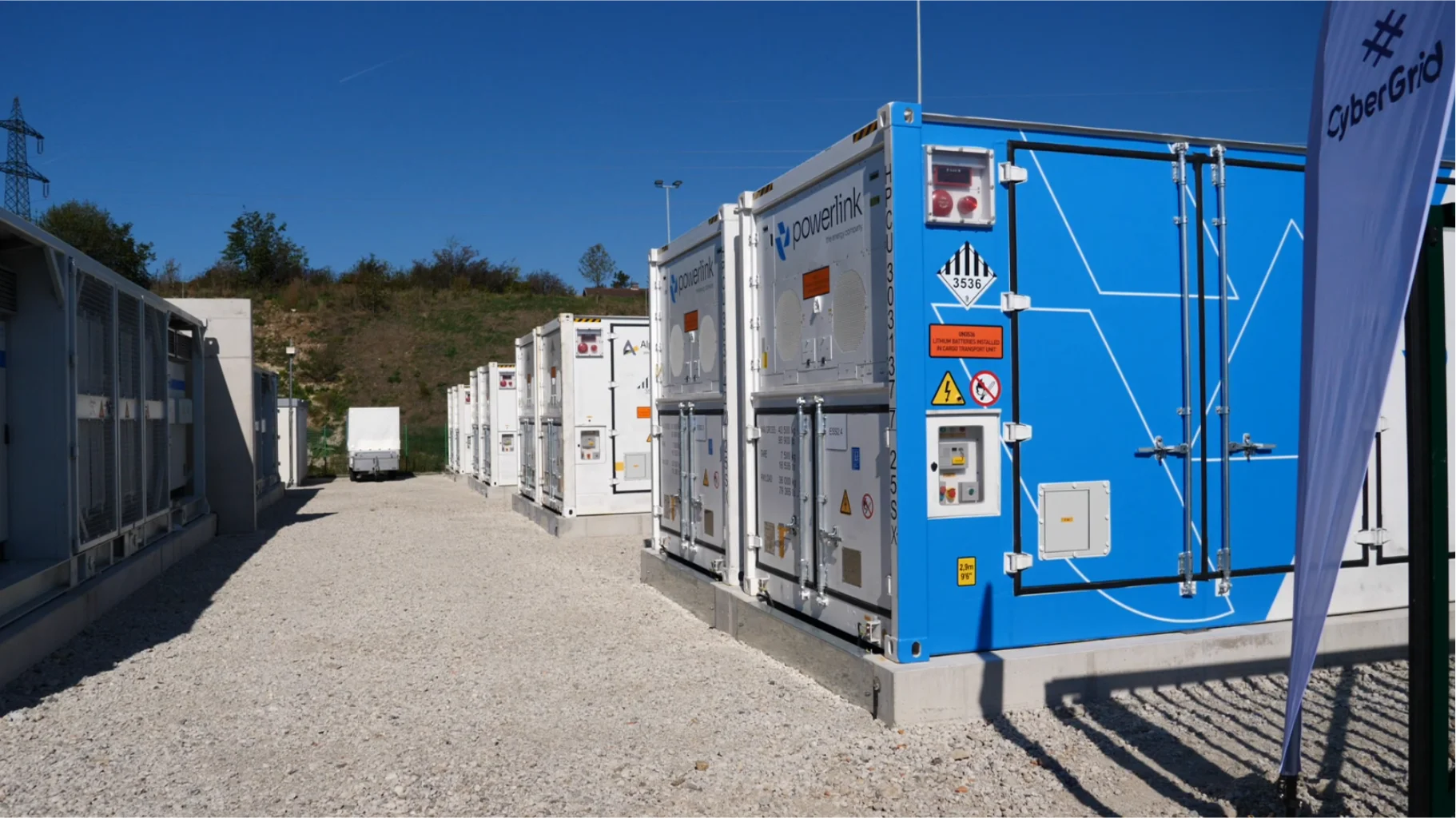
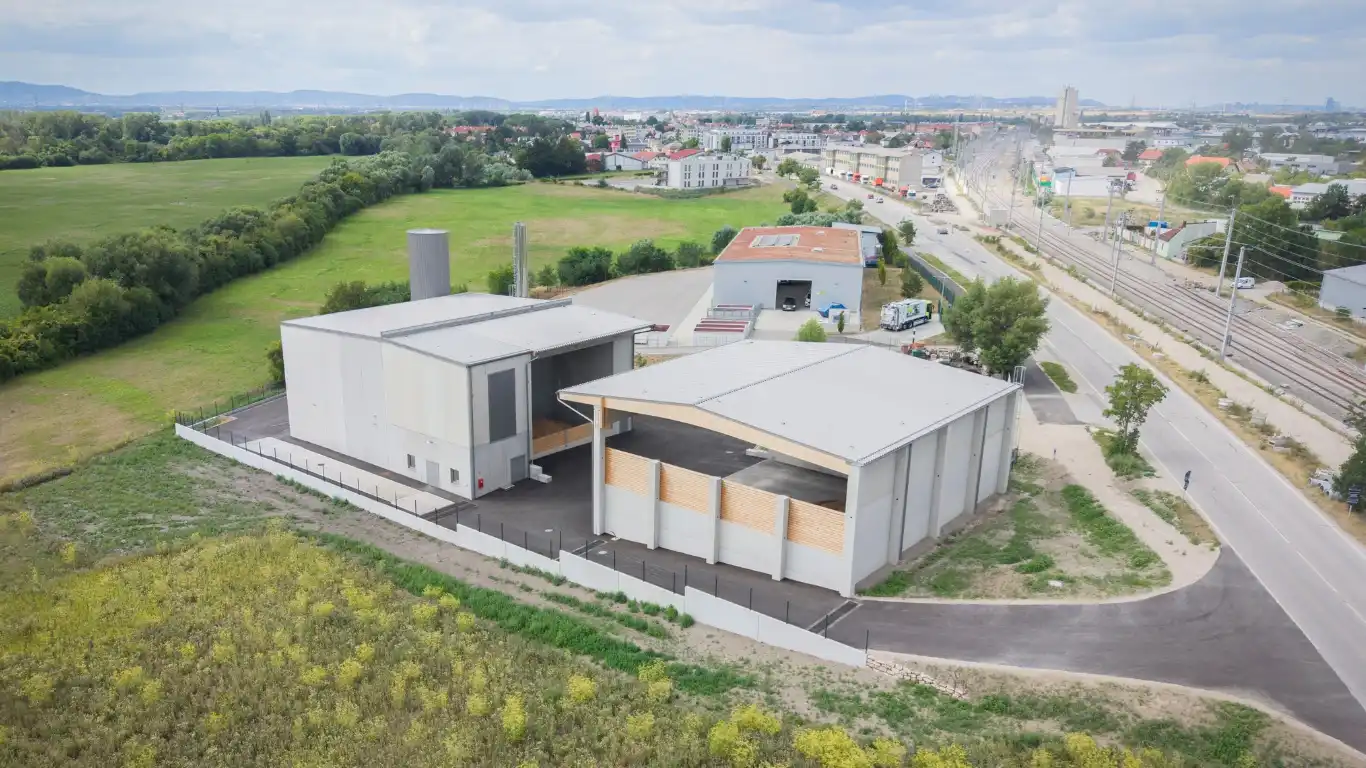
Stadtwerke Amstetten expands its renewable energy portfolio with the integration of a 1 MW / 2 MWh lithium iron phosphate (LFP) battery energy storage system (BESS) with its Allersdorf run-of-river hydropower plant. The project combines renewable generation and storage to provide grid services, optimize electricity trading, and enhance security of supply—including blackout-ready island operation.
A fully integrated hybrid system
The co-location of hydropower and battery storage enables the plant to operate as a fully integrated flexibility asset, increasing responsiveness to market signals and grid needs.
The run-of-river hydropower plant, equipped with two Kaplan turbines and with a total installed capacity of 3 MW, generates around 15GWh of renewable electricity annually. The facility is now complemented by a LFP battery storage system with a power output of 1 MW and a usable storage capacity of 2 MWh.
Key use cases: flexibility, grid services, and trading
The hybrid system is designed to maximize value across electricity markets and grid services.
1. Balancing energy and ancillary services
The BESS provides automatic Frequency Restoration Reserve (aFRR) and manual Frequency Restoration Reserve (mFRR), contributing to grid stability in Austria.
- Prequalified by Austrian Power Grid (APG)
- Actively marketed since February 2026
- Direct energy absorption from hydropower is possible during negative activation without drawing power from the grid
2. Intraday optimization
The battery enables intraday shifting of hydropower generation, allowing Stadtwerke Amstetten to respond dynamically to price fluctuations.
3. Electricity trading optimization
By leveraging short-term electricity markets, the system supports:
- Revenue maximization through arbitrage
- Improved dispatch flexibility with rapid response to market price fluctuations
4. Peak load management and grid support
The battery is connected behind-the-meter on the medium-voltage level, enabling:
- Peak load balancing
- Voltage stabilization and reactive power support (optional)
Technical integration: behind-the-meter flexibility
The battery is directly connected to the two Kaplan turbines and integrated on the medium-voltage side via its own busbar “behind-the-meter”. This enables peak load balancing, increased flexibility in electricity marketing, and higher contribution to grid stability.
The storage system is controlled via the central control system of Stadtwerke Amstetten GmbH. This system is connected both to the battery management system (BMS) and the manufacturer’s energy management system (EMS).The commercialization of the storage capacity is handled by CyberGrid connected via a Modbus RTU interface.
If the output of the Kaplan turbines is insufficient for a given activation, additional energy can be drawn from the public grid.
Optimizing revenue with the CyberNoc platform
The flexibility of the combined assets is monetized in short-term electricity markets by CyberGrid, using the CyberNoc optimization and trading platform. Stadtwerke Amstetten benefits from participation in aFRR and mFRR, as well as from optimized dispatch across multiple markets.
Read more about the initial project developments.
Blackout resilience: island operation capability
A key innovation of the project is its blackout-ready island operation capability. In the case of a large-scale power outage, the battery storage system can act as an intelligent buffer between electricity generation and consumption.
The run-of-river hydropower plant is capable of providing a minimum output of approximately 300 kW, which ensures a stable emergency power supply over time.
In island operation mode, the central buildings of Stadtwerke Amstetten GmbH—including the power plant building, office buildings, and workshop facilities—could be supplied with electrical energy. This would enable the continued operation of emergency services for electricity, drinking water, and district heating supply, even during a blackout.
An innovative hybrid power plant portfolio
With a history of more than 120 years, the run-of-river hydro power plant in Allersdorf is a cornerstone of the region’s renewable energy supply. The integration of a battery energy storage system represents a strategic milestone in the ongoing development of Stadtwerke Amstetten’s energy portfolio. By combining proven hydropower generation with modern storage technology, the utility is transforming its assets into a flexibility-driven, future-ready energy system.
The project’s objective is to create an innovative hybrid powerplant portfolio that maximizes the efficiency of existing generation assets while unlocking additional value through grid-supporting services and market participation.