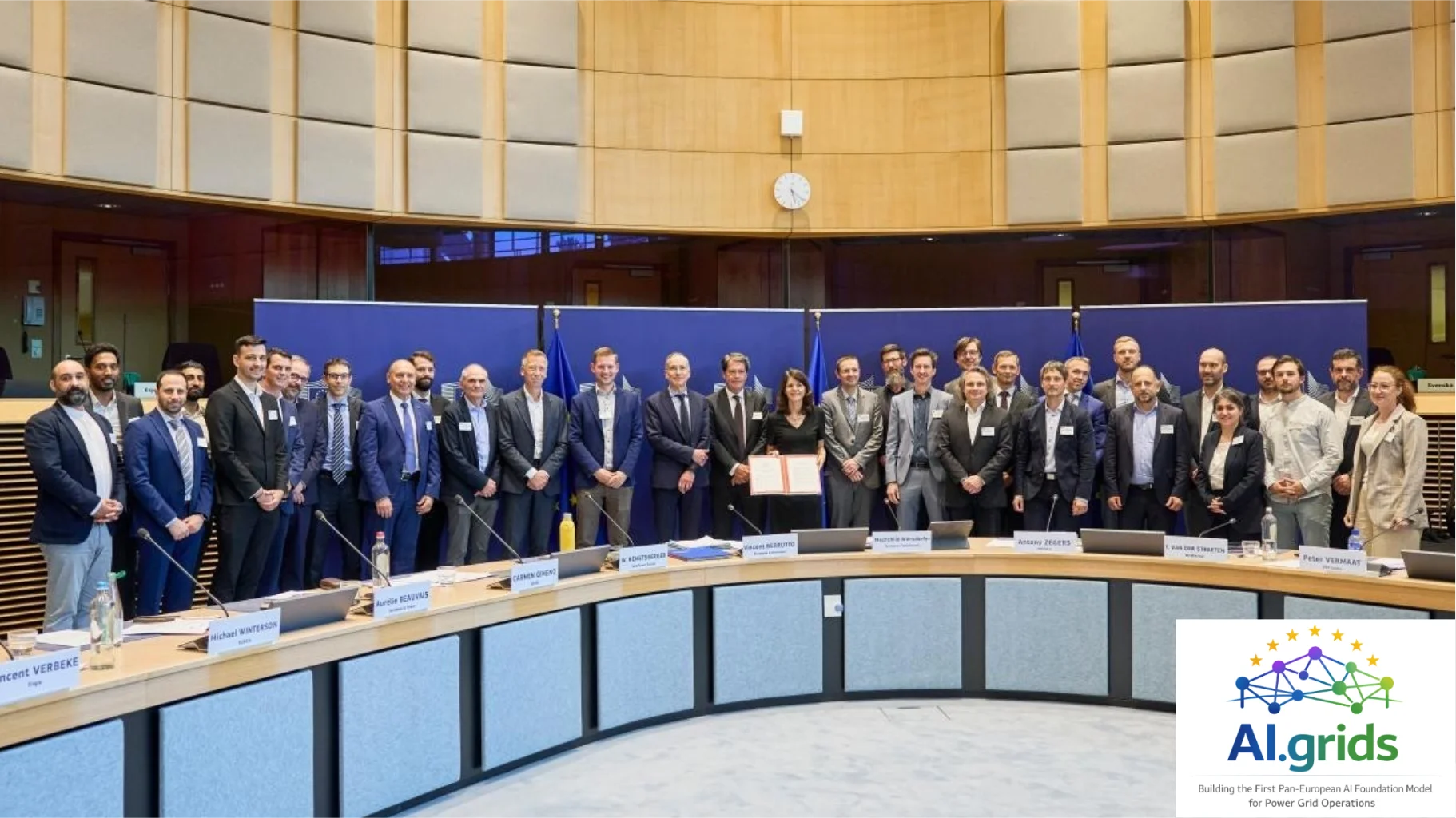
CyberGrid is part of AI.grids, a European initiative that aims to develop an AI foundation model for electricity grid operations. This collaborative project is embedded in the EU's Strategic Roadmap for Digitalization and AI in the Energy Sector and launched under the auspices of the European Commission's Directorate-General for Energy (DG ENER). Led by the Fraunhofer Center Digital Energy, the project is supported by 48 partners from electricity network operators and research institutions to technology providers across Europe. It was officially launched in Brussels on June 3, 2026, and seeks to strengthen Europe's leadership in sovereign AI technologies while supporting key energy objectives such as grid optimization, demand-side flexibility, renewable energy integration, and energy efficiency.
By combining expertise from across the energy sector, AI.grids aims to develop advanced AI solutions that help grid operators manage increasingly complex energy systems and accelerate the transition towards a more flexible, resilient, and decarbonized electricity network. This initiative complements the AI Act - the first comprehensive legal framework on AI - and the AI Continent Action Plan launched by the European Commission.
Building Europe's AI foundation for electricity grids
AI.grids is built on an open and collaborative framework. The AI models are developed jointly and trained using European data, including real operational grid data and synthetic datasets based on European energy infrastructure, as stated by the Fraunhofer Center Digital Energy, thereby enabling higher transparency and interoperability.
The first outcomes are expected from 2027 onwards, and are focused on two key domains:
- Static grid modeling
- Time-series forecasts for generation and loads
These capabilities should support better grid planning, forecasting, and operational decision-making across Europe's electricity networks.
CyberGrid's contribution
As part of the AI.grids initiative, CyberGrid contributes its expertise in flexibility management and the optimization of distributed energy resources within the foreseen use cases. Our involvement focuses on the development of practical AI applications that can help grid operators, flexibility providers, and energy market participants to operate more efficiently while accelerating the digitalization and decarbonization of Europe's energy system.
Through this collaboration, CyberGrid helps advance AI-driven solutions for modern power systems by covering flexibility management use cases involving aggregated flexible assets such as battery storage, renewable energy systems, power-to-heat installations, CHP units, and electric vehicles; while supporting balancing, congestion management, voltage control, and spot market trading.