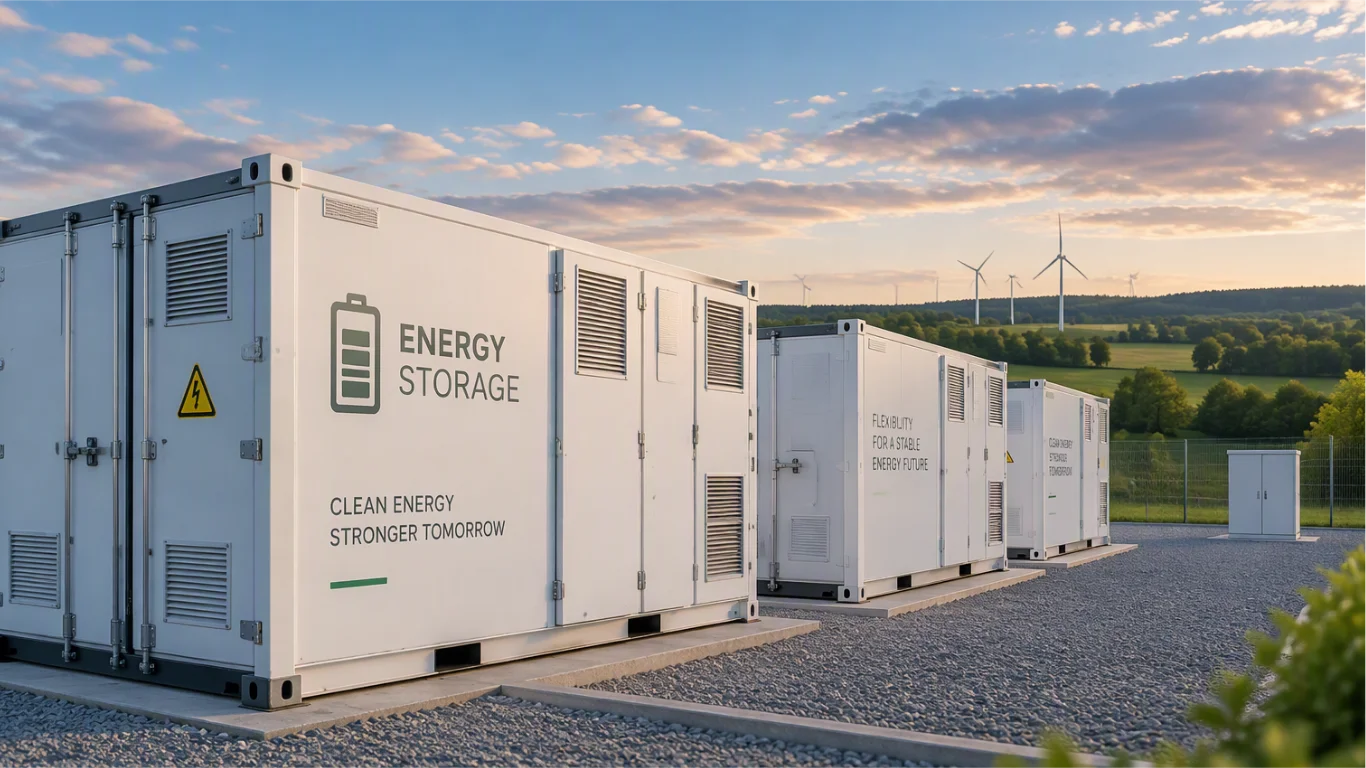
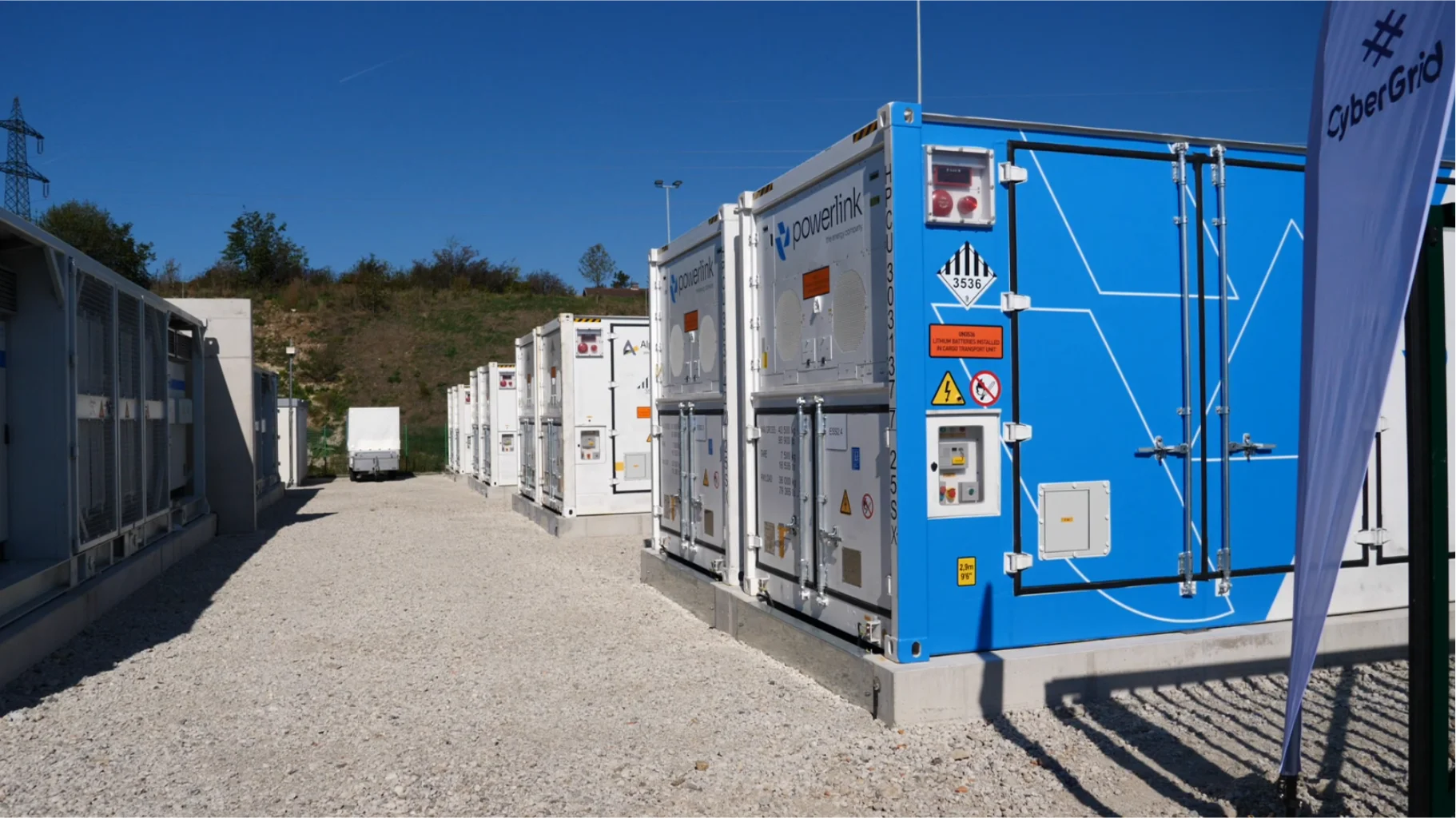
The Battery Energy Storage System (BESS) is situated alongside EVN's Trumau photovoltaic palnt and the nearby Tattendorf wind farm. This hybrid system owned by EVN Naturkraft is designed to deliver clean energy services, supplying green electricity to approximately 13,000 households. The battery storage integration with the existing renewable energy generation sources optimizes the overall performance of the hybrid park and brings a wide range of new possibilities to stabilize the grid and create new revenue streams by providing flexibility.
The Tattendorf wind farm, which began operation more than 10 years ago, consists of eight wind turbines with a total capacity of 16 MW. These turbines have generated more than 330 million kWh of green electricity. The large-scale photovoltaic plant in Trumau, with a capacity of 10 MW, was constructed in 2022 and began supplying power to approximately 3,000 households the following year. The two power plants are interconnected and share the same grid connection, which allows them to optimize grid capacity, fully realize their potential, and efficiently utilize the existing grid infrastructure. By incorporating the battery energy storage system, the hybrid plant will have the capability to store surplus electricity and feed it back into the grid when needed, helping to maintain grid stability. It can also draw energy from the grid during times of excess generation to alleviate pressure and balance demand.

BESS for balancing services and energy trading
The battery energy storage integrated into the hybrid park includes an SMA MVPS SKID and a Hithium battery container with 3,4 MW / 6,8 MWh and a medium-voltage connection. With the aggregation of the BESS into the hybrid system, EVN wants to provide grid services for Frequency Containment Reserve (FCR), automatic Frequency Restoration Reserve (aFRR), and manual Frequency Restoration Reserve (mFRR). Market participation is possible thanks to CyberGrid's flexibility management platform, CyberNoc, which is utilized to optimize and monetize the flexibility of the energy assets on the balancing and wholesale energy markets. Through our virtual power plant, we seamlessly integrate these assets into the energy market, enhancing grid stability and supporting a more resilient energy system. At the same time, we drive profitability by optimizing the value of energy storage and renewable generation, enabling better demand response and more efficient use of available resources.
The operational strategy for the Trumau BESS includes the use of a certain percentage of its cycles for balancing services, and another portion for optimization of energy trading on the day-ahead and intraday markets. It is anticipated that the BESS will cycle approximately twice per day. A key feature of its operation is that grid power will only be drawn when the BESS is providing regulation reserve services.