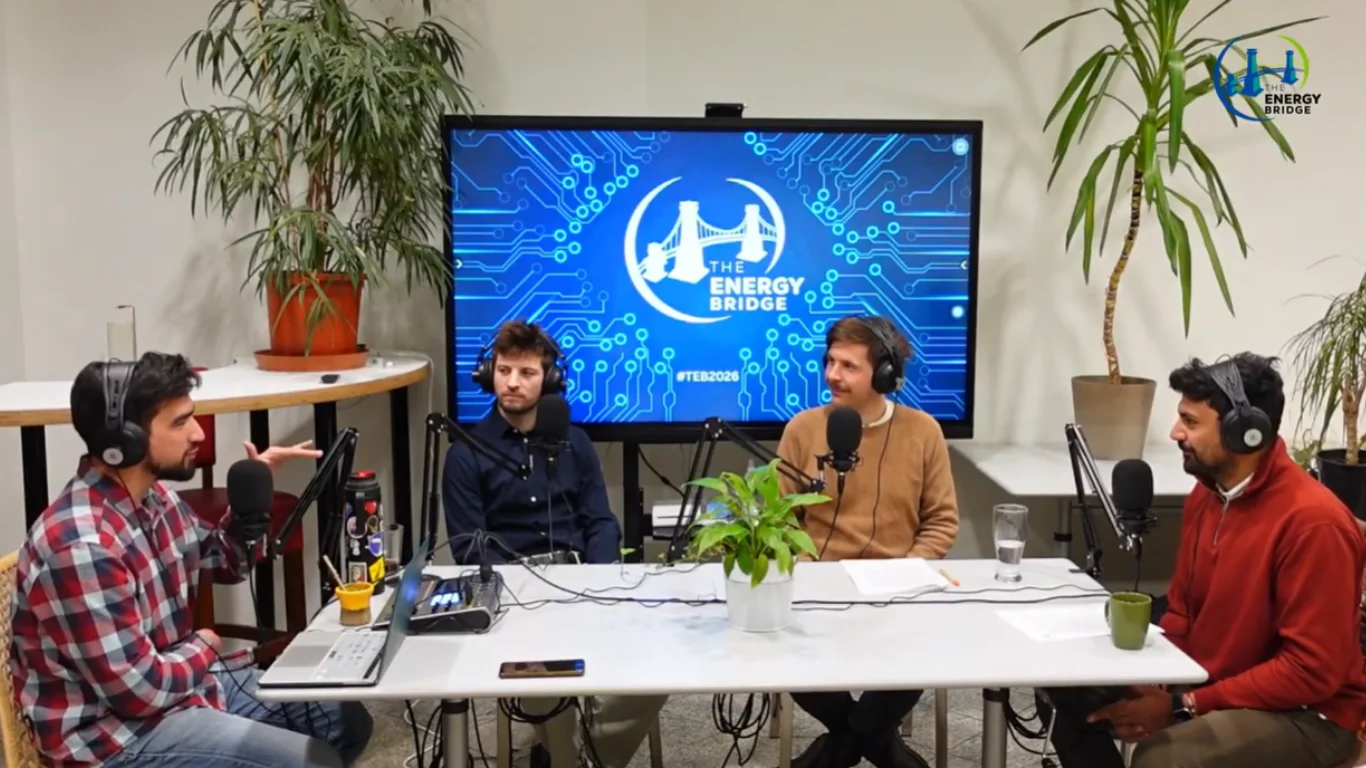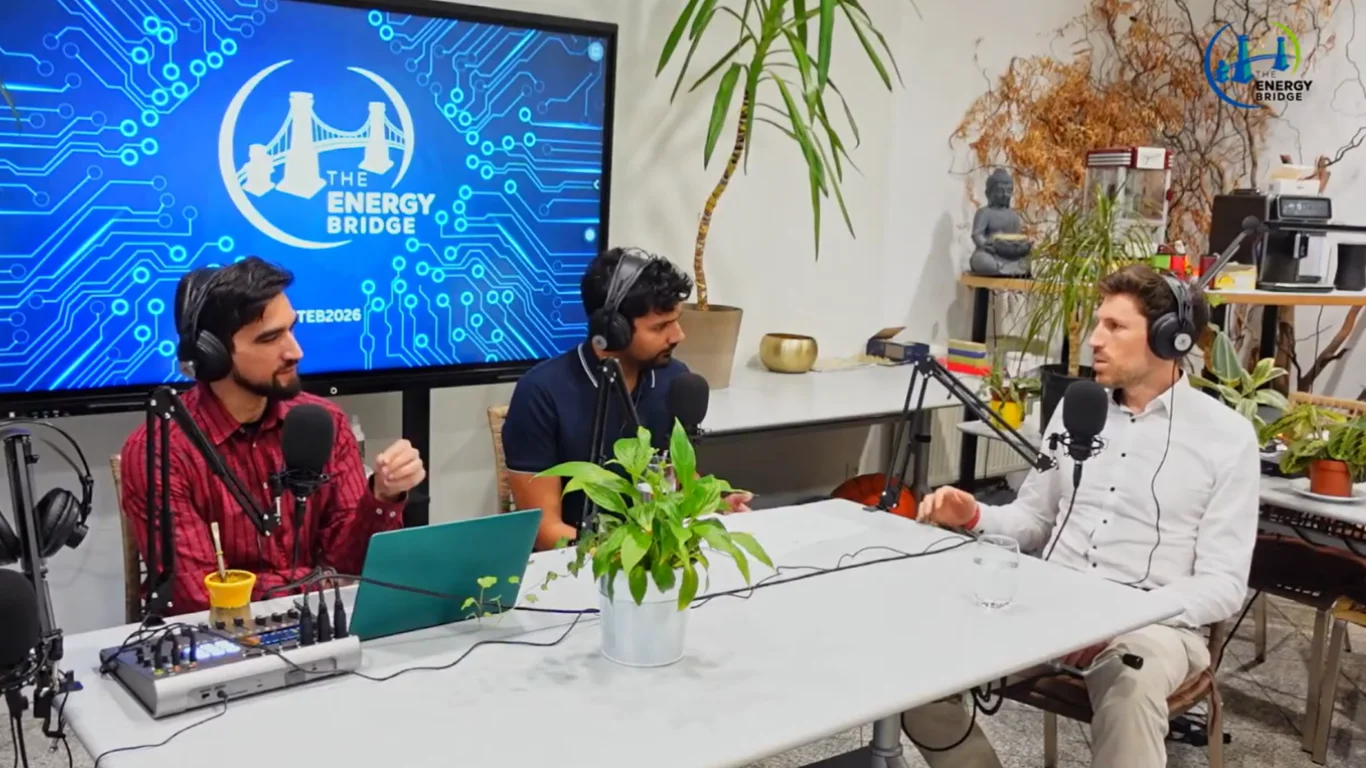
The decarbonization of Europe’s power system is not just about generating clean energy, it is about keeping the grid stable every second of the day. We are thrilled to announce the publication of the podcast “Preventing Europe’s next blackout: flexibility, AI& the business of the grid” produced by The Energy Bridge with the participation of CyberGrid, that explores the energy transition in Central and Eastern Europe.
As variable renewables such as wind and solar dominate Europe’s generation mix, the challenge is no longer solely production but flexibility. The federation of European utilities Eurelectric defines flexibility as the ability of an energy system to adjust both generation and consumption in response to grid or market signals to ensure security of supply. Flexibility acts as a shock absorber, mitigating the effects of fluctuating renewable output and shifting demand patterns. Europe’s energy system is evolving from a centralized, fossil‑fuel‑based model to a decentralized, renewables‑driven one. Nearly two‑thirds of the EU’s electricity now comes from clean sources, but this variability demands assets that can swiftly adjust generation or consumption to avoid blackouts.
In the podcast, Philip Hahn, Head of Flexibility Services at CyberGrid, highlights that grid operators used to rely on large thermal plants that could be ramped up or down. With renewables, frequency deviations are more frequent, and the real bottleneck is flexibility, not generation. Operators must balance the system every few seconds; mismatches cause frequency excursions that risk widespread outages. Flexibility services, including FCR, aFRR, mFRR, are therefore becoming central markets rather than ancillary ones. The energy transition will hinge on unlocking flexibility from distributed assets, including batteries, hydropower plants and demand response. CyberGrid’s platform monitors assets in real time and dispatches them across multiple markets, capturing revenue while respecting technical constraints.
The CyberNoc platform developed by CyberGrid integrates batteries, hydropower plants, EV chargers and other assets into balancing markets. In a case study for the Kals Energie Kraftwerk, CyberGrid connected the plant’s hydropower units to EVN’s pool and enabled them to participate in balancing markets without building their own market access.
Overall, the energy transition is as much about invisible infrastructure as it is about visible wind turbines and solar panels. Platforms such as CyberGrid’s CyberNoc are turning flexibility into a tradable commodity.